
News

The 5S method at Atlas Lift

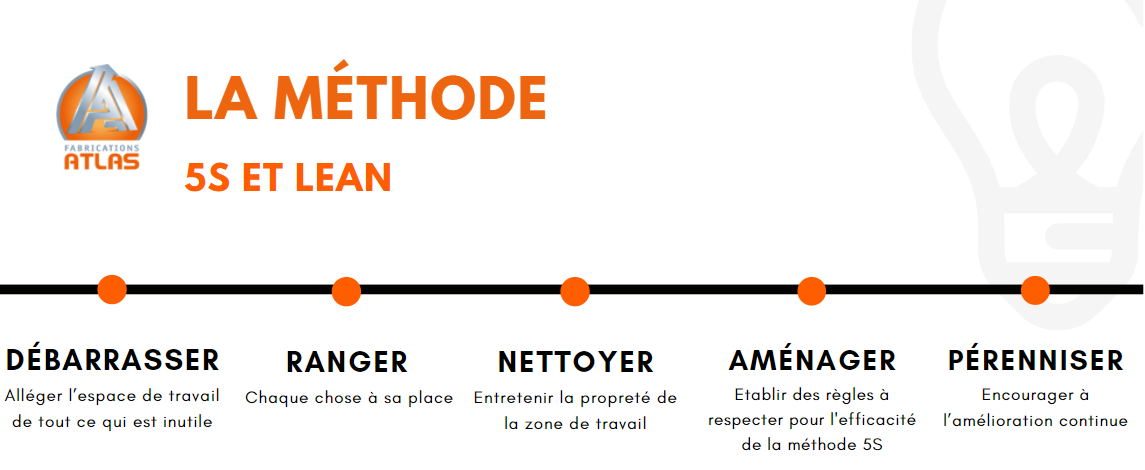
Diagram of the 5S method: sort, set in order, shine, standardise, sustain

The 5S method: what does it involve? The 5S method is an essential tool for continuous improvement. It is a Japanese management practice aimed at optimising working conditions and the working environment, by ensuring that this environment is kept tidy, clean and safe. Designed mainly for workshops and factories, it is a working system that is quick and easy to implement. Each of the 5Ss corresponds to an action, an operation or a rule to be applied in order to…

Lifting solution for ATEX zones

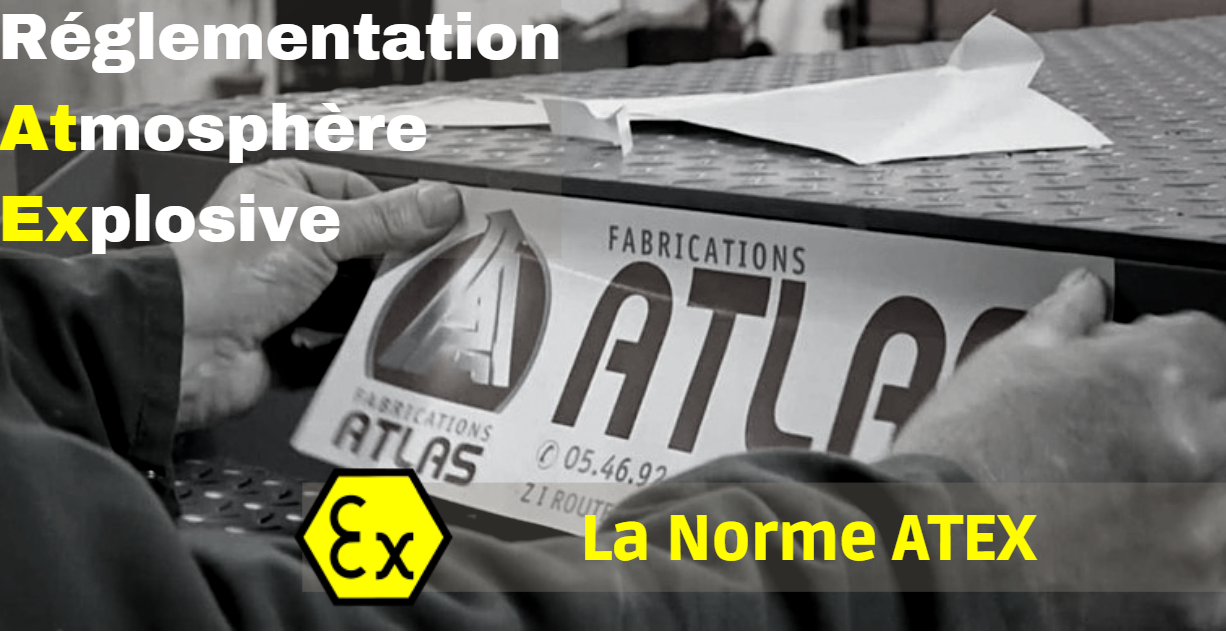
'ATEX Regulations' graphic: Fabrications Atlas plate and Ex logo for explosive atmospheres

Are you wondering how to lift or handle loads in a sensitive environment, or even a hazardous one, without compromising quality or the health and safety of your staff? Atlas Lift, renowned for the quality of its products, has the solution, with equipment that complies with the ATEX directives. The ATEX directives: what are they? The ATEX directives are a set of guidelines, rules and regulations for controlling the risks associated with hazardous working environments, which are classified into zones…

Meet us at the OMIA themed days in Les Sables-d’Olonne.

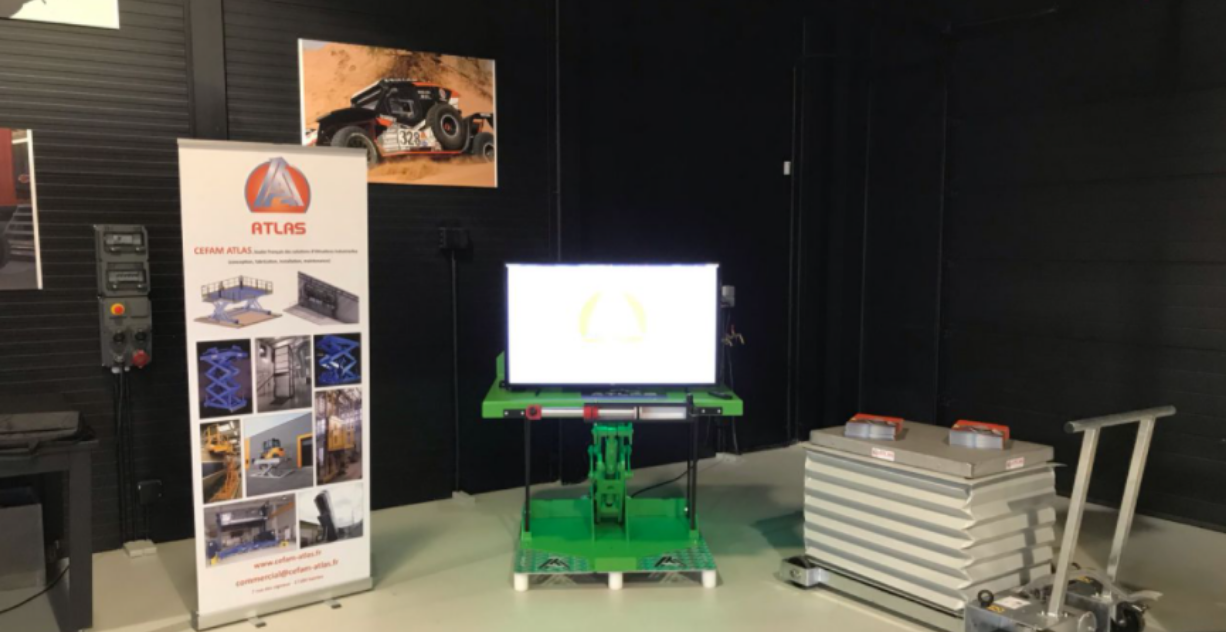
Atlas Lift stand at the OMIA days in Les Sables-d'Olonne, with two lift tables on display

Here is a short look back at the OMIA themed days in Les Sables-d’Olonne. The OMIA themed days in Les Sables-d’Olonne came to a close in glorious sunshine, giving ATLAS LIFT the opportunity to look back on the event and also to thank all our partners and everyone who visited us on our stand. ATLAS LIFT took part in the themed days on the theme of painting and surface treatment booths made in France. It was the ideal moment for…

Accompanied goods lift: compliance with safety standards

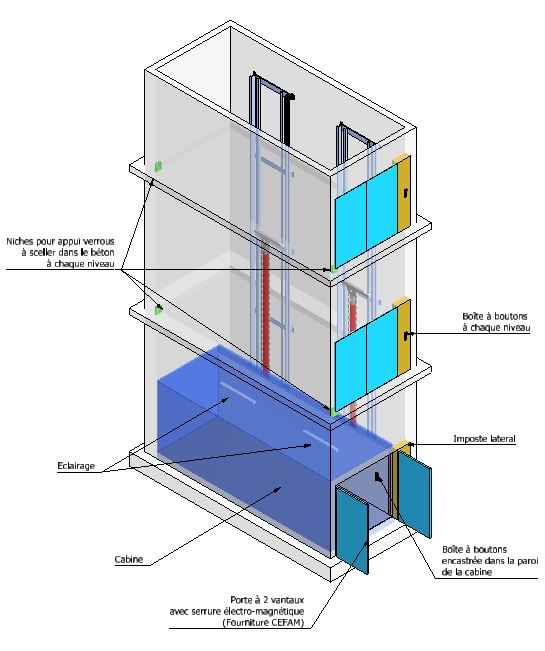
Accompanied goods lift - 3D drawing - Cefam Atlas

Accompanied goods lift: compliance with safety standards. Following on from an initial quotation for an unaccompanied goods lift submitted to a firm of architects, we presented them with the accompanied goods lift version. This means that their client’s authorised user will be able to travel to the different floors of the building, accompanying the load inside the lift car. Consequently, in this case, various measures are adopted to ensure the safety of persons. On completion of the installation and before…

Stainless steel lift table: a necessity in many cases

Port of La Rochelle, a customer of CEFAM ATLAS lift tables

The fish auction at the Port of La Rochelle is the meeting place par excellence for fish buyers, fish merchants and fishermen. It is a place where working conditions remain harsh for both people and machines. Sea air, high salinity, high-pressure cleaning… all factors that must be taken into account when designing a lift table. To meet its customer’s needs, Atlas Lift supplied a 316L stainless steel lift table. The design office specified the various components of this lift table…

50 years of lift table engineering and design

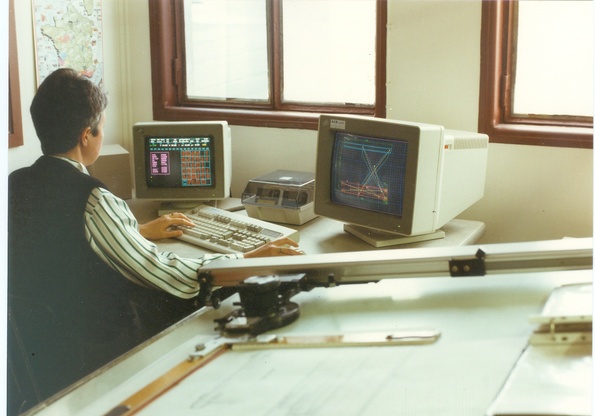
Computer-aided design workstation in the Cefam design office in 1989

Since Cefam Atlas was founded in the late 1960s, the design office has been one of the pillars of the company’s smooth running. Both the number of draughtsmen and their working methods have changed considerably over 50 years. Here are the three main stages in the history of the design office: THE PAPER AGE: In the early days, in the 1970s, drawings were produced by hand by the draughtsmen on drawing boards, then traced out as clean copies by the…

1977: aeronautics at the service of CEFAM!

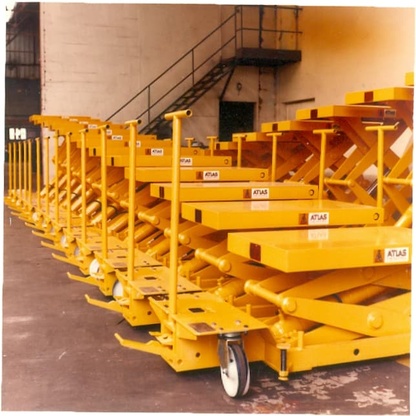
Row of yellow mobile lift tables in the workshop, 1977 Cefam archive photo for the aeronautics sector

CEFAM Atlas would go on to become a major player in its sector, offering ever more innovative lift tables. Discover this remarkable year! The year 1977 was marked by major technical changes in lift table design. The most important of these concerned the positioning of the hydraulic cylinders. Until then, the base-frame cylinder technique had been used: this method consisted of placing the foot of the cylinder on the base frame and pushing against the table platform. The new technique,…